06/30/11

Pain, confusion, and hope in Tahrir on the night of the 28th of June

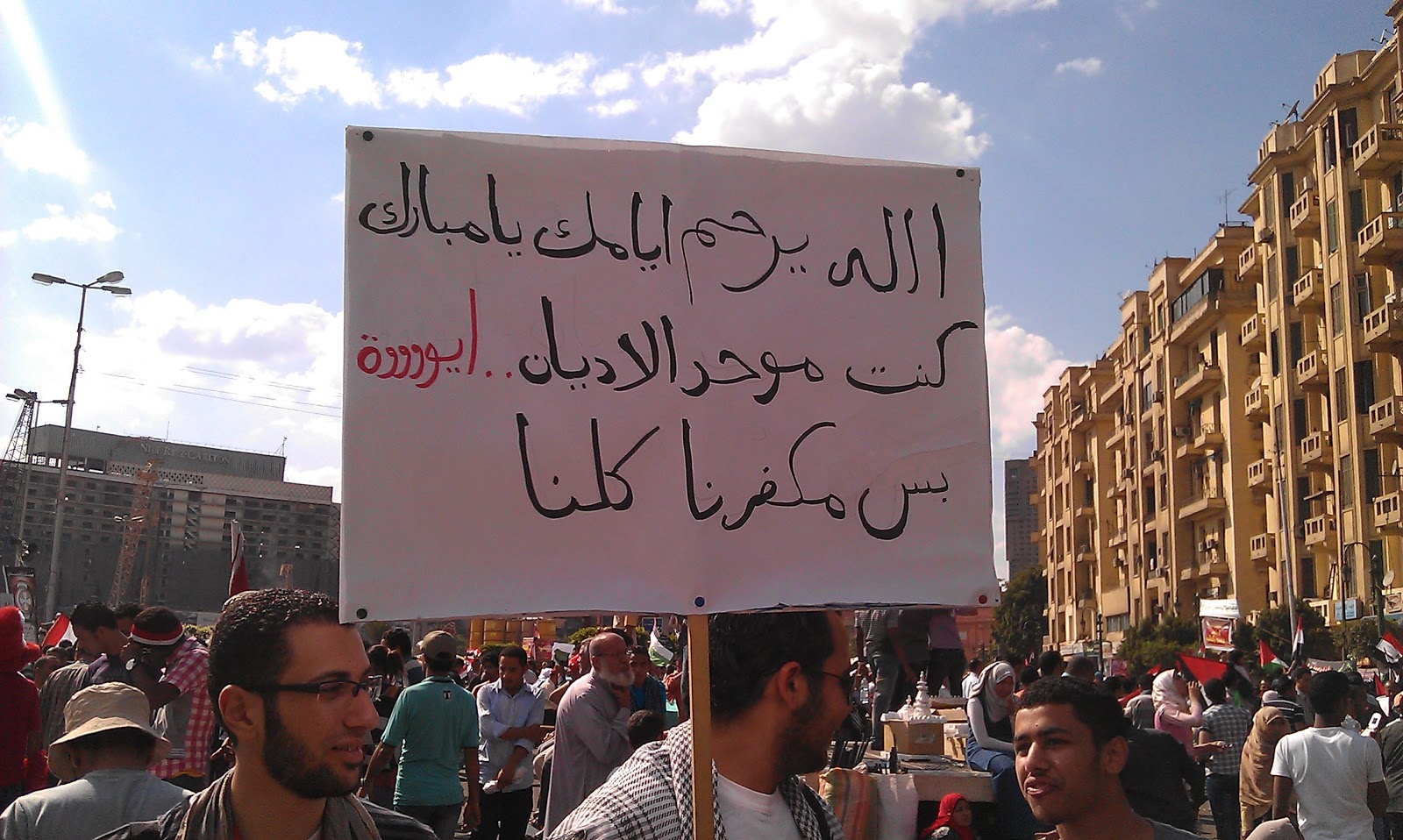
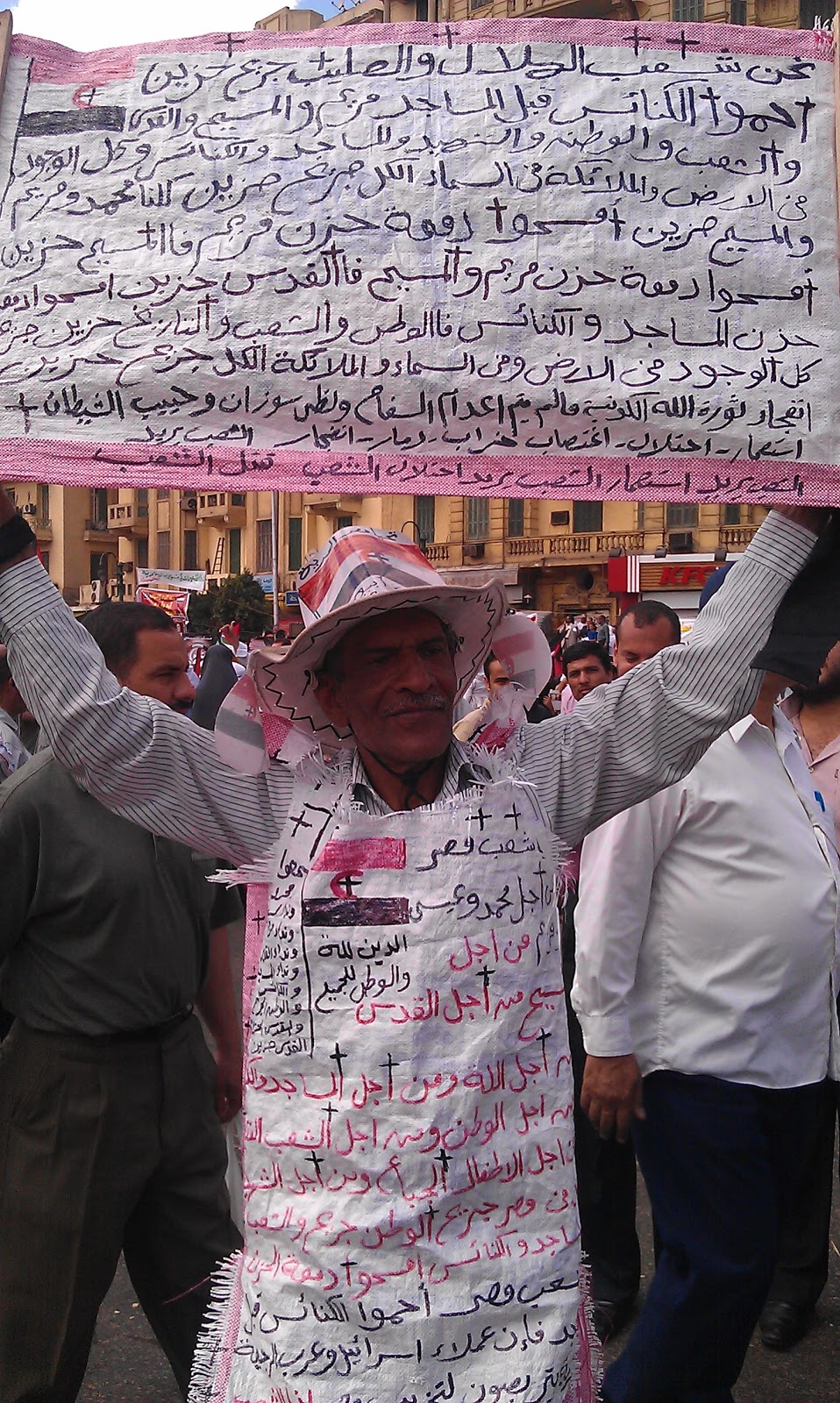
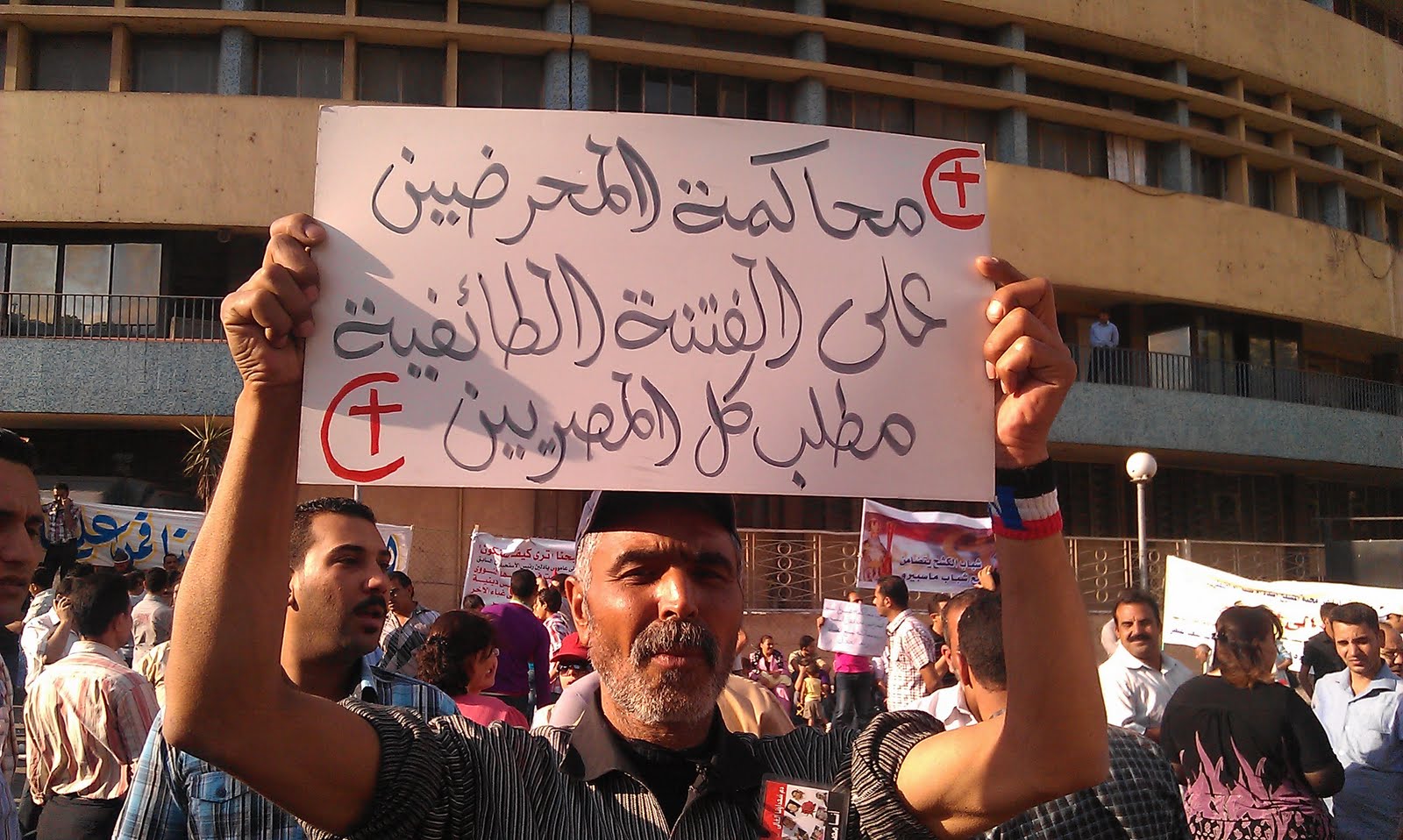
Breakdown of trust, loss of faith, desperation, aggression, hope beyond reason, shock, pain, poss, suffering, and confusion. I was assaulted by a multitude of feeling as I was walking through Tahrir on the afternoon of June the 29th. I missed out on the battle of that raged during the night between the families of the martyrs and their supporters and the central security forces (CSF), who seemed engaged in taking out vengeance against the protesters. They CSF wanted to engage in petty payback for the setback in suffered exactly five months earlier. The video below details what has been going on.

The battle raged for over ten hours with plenty of rock throwing, teargas,  rubber bullets, and Molotov cocktails. Over one thousand protester were injured during the confrontations. The protesters were determined not the let the CSF have the upper hand. The would allow the CSF  scoring a victory over their ability to sit-in or express their grievances. For some background read this article from Time magazine, or the insightful perspective  by the accomplished  Egyptian writer Ahdaf Soueif. Official media in Egypt started to describe the protesters as thugs, agents of foreign powers, and even wilder conspiracies.    
A friend of mine who was in Tahrir that night wrote to me about his perplexity with what is going on and his the perspective he gets from being in Tahrir vs. the mainstream opinions and views :

I’m Really lost in the political opinions and the question that always come in mind “is this a revolution ? are we still in the revolutionary phase or is it time to keep going and start constructing and forsake justice and faith? Should we concentrate now on the economical state?”
I was in Tahrir June 28th I didn’t go for a specific demand, I was just driven by anger that the Central Security Forces are still treating protesters with same brutality as before.
I didn’t see any thugs, and when I came home and watch TV I kept wondering “Am I a thug ? Are we destroying the country unconsciously? Egypt on TV is so different than Egypt on Facebook than Egypt on Twitter Than Egypt on the street.

Information is so contradicting that it gets me to wonder if this was all wrong from the beginning! Or if our problem is deeper than a economical and political issues, a problem been forged in generations of cultural pollution and educational corruption, A problem that needs some sort or metaphysical higher power to do the solution for us, Should we forsake science and analysis because the problem is too hard to solve ?
I need your immediate opinion before I lose my mind!

My response was

I understand your confusion. Your situation must be aggravated by many of your friends and family casting doubt on your actions and portraying it in a totally different light.
The statement lets concentrate on X, is very silly and fallacious. It might work for one person. If X=economy and I was an economist, I would clearly know where my focus is. But if I was a student, what would “lets concentrate on the economy” mean (other than switching major)? It is quite absurd to suggest to a mother of a martyr that she should now concentrate on the economy, election, the constitution or whatever.

I follow a certain principle when trying to examine my actions. It can be expressed as follows “noble motives may give rise noble outcomes, but petty and base motives will almost certainly give rise to disastrous outcomes”. For me (and some might disagree), pure anger or hate is quite negative and pretty evil things can arise from them. However, if you were mainly in Tahrir to defend the families of the martyrs and fight against brutality, lies, and falsehood. That is pretty noble, that is something worthy dying for. The intention or motive is sometimes more important that the action itself.

I did not go out on June 28th (I really wanted to, but couldn’t), by many of my old Tahrir friends did. I respect and admire them for it, knowing what drove them to be there and their motives.
The revolution will not magically solve all the problems of Egypt in a blink of an eye. What are we fighting for then? If not a solution, then what? We are fighting for having a country that would be have enough room for all of us, whatever our social class, religious background, or political inclinations. In that society we will have the space and freedom to solve our problems, we will be able to dream of a better future and work hard to realize it. In order for us to create that free and open society there are certain prerequisites:

1. Justice (specially for those who died for that dream)
2. Transparency
3. Integrity (no lies)
4. A mechanism for collective problem solving (i.e. some form of democracy)

We seem to be losing on all those areas. If we can not satisfy those prerequisites we are are building a new Egypt based on lies and falsehood. It will be nothing more than the old rotten Egypt with a few label changes. The question regarding how do we realize those prerequisites is not a easy one to answer, and would require a lengthy discussion. Certainly we could use as much divine help as possible, but divine help only makes itself manifest when we purify ourselves and our intentions.

However a few things are certain and clear. When the families of the martyrs are ill treated or attacked, this is a clear travesty of justice and requires a serious stand and a loud response. When the police is brutal with your friends, you don’t abandon them for the comfort of your bed, but stand beside them and support them with your utmost ability. That is the decent thing to do.
Finally, we should never forsake science or analysis. We should try to use our knowledge to the best of our abilities. However, when doing so it is important to remind ourselves of the limitations of our analysis and the extent of there usefulness.

It is my view that sometimes it is better to simply stand for what you believe in and what your heart dictates than to engage in a calculus of power analysis. That is in some way a rational choice. For even when the odds seem stacked up against you and your loss seems certain, you make a clear choice that you prefer death, imprisonment, or injury than to live a life of fear,tyranny and oppression.

The revolution continues…

06/8/11

The Revolution in Transition: The Main Players

I am not too happy writing is post, I am actually downright feeling guilty to have undertaken to do that. What I attempt to explore here is the balance of forces between the different players in post revolutionary Egypt. That would have been perfectly okay if not for the fact the many of those who once stood together at Tahrir are currently drawing ideological battle lines and staking their claims to future of Egypt. This sits in dark contrast with the days of unity and  the elation that we all felt in Tahrir as being all one. In those days there was something that bounded us that transcended any ideology.

I urge you to resist the temptation to  start rolling your eyes, thinking that the author of these lines is nothing but a weary revolutionary who has little understanding of the forces of history and natural propensity of humans adopt differing and often opposing ideological stances. In this post I am not calling for any form of ideological unity. I know this to would be difficult (if not impossible) to achieve and is not necessarily desirable. I attempt here to briefly present an idiosyncratic reading of all the current players and their possible strategies.

The Supreme Council of the Armed Forces (SCAF) 
The SCAF runs the Egyptian army with all its associated industrial and commercial interests, the primary concerns that drive their moves are:

  1. Insuring that SCAF members and their minions will not come under any public scrutiny with regards to their spending habits, benefits, profiteering, and relationship with Mubarak and his coterie. (Basic survival)
  2. Making sure that the emerging political landscape will not at any time run against (1), and hence their interest in having the a strong say in how the new constitution will get drafted and approved. (Medium term Survival)
  3. Maintaining a the popular perception that people and army’s leadership are one hand (Long term Survival). 
The SCAF will not have any designs on direct power if someone can do the job for them. It appears that they are willing to cut deals with whomever will assuage their concerns. The road-map that they have put forth for democratic transition appears serve well their survival interests. 
The Muslim Brotherhood (MB)
The MB is a very resilient organization that has managed to survive the political tumult of Egypt for over 82 years. They have grand pan-Islamic project that they have been unrelentingly trying to achieve in Egypt and elsewhere. Their leadership has often displayed some degree of political opportunism throughout their history. They were the King’s Men in the time of Farouk, they blessed the 1952 revolution, and they now seek favor with the SCAF by presenting themselves as well organized political block that the SCAF could do business with. They are now the SCAF’s loudest cheerleaders. The MB see themselves as having a significant competitive  advantage over all the other political forces that they would want to make the best use of that, before there edge becomes blunted. They seem to be working along following strategies:
  1. Making sure that nothing upsets they road-map that was put forth by SCAF as it best serves their interests.
  2. Building alliances with “Salfi” groups and using them at the front lines while presenting themselves as religious moderates
  3. Establishing good ties with the venerable Azhar university and gradually subsuming it ideologically. 
The prize of the MB is get to control the parliament following the election in September. It they succeed, they will draft a constitution to their liking and get to shape the future political landscape to their advantage. 
The Socialists 
Economic disfranchisement was one of the key catalysis the brought forth the revolution, but hearing the rhetoric of many leftists one might assume it was the singular motive force. The socialist seem to be standing quite divided and they seem to be engaged in internecine  ideological warfare. Although they very vocal about the rights of the downtrodden, they seem to have little to say about how can the economy can be shaped in a way that would make it globally competitive and attractive to investors. One can see little in terms of  strategy beyond dismantling the exploitative economic system that we have in inherited from the Mubarak era.. 
The Liberals 
Often Mubarak’s economic policy is labeled “liberal” and hence the word has become laden with negative connotations. To make matters worse Islamist  have often spewed vitriol by equating liberalism with  licentiousness and debauchery in their  sermons. Beyond their emphasis the basic civil rights, they have provided little in terms of coherent economic policies that would address the accumulated social injustices.   
The Ideologically Agnostic  (IA)
This group is the probably the largest constituency of those who participated in the revolution. They share common broad concerns about the country and they have yet to subscribe to any given political philosophy. The ElAdl party seem to particularly  cater  for this group, and also pressure group know as Djabha. Yet this group, like the liberals and the socialists  is still struggling to formulate a coherent political and economic plan. 
The energies of the Liberals, Socialists and the IA seems to be completely sapped in putting out fires like sectarian strife,  anti-protest laws, and human rights abuses. They are also trying to fight rhetoric levied against them by Islamist and an assortment of counter revolutionary groups.  
Where do we go from here?
Drafting a constitution involves a great deal of compromise where the point is to lay down  the essential principles of the relationship between citizens and the state and how societal self corrective forces work. It is hard, or nigh impossible to do that in an environment where the different players are focused of defining the battle line to gain advantage. An attitude of  beggaring thy ideological opponent is bound to spell  disaster. It is not clear how one can temper the lust for power of many of those groups. I only  hope the IA will grow quickly more organized and will rise above such petty ideological warfare. It is the only way I can think of for the spirit of the revolution to live just a bit longer to lay a new and fresh foundation for the second Egyptian republic. 

05/23/11

Regroup Now!

We are under attack and our dreams are under siege. After a little over three months it is becoming deadly clear that certain forces are trying to outflank us, and they have already had some success. We must regroup now or all is lost and noble sentiments and aspirations that we experienced will be nothing more than a fading memory. The stuff of lamentations over what could have been and how we it let slip our grasp.

Some readers at this point might object: What are you whining about? Why this talk of gloom, conspiracy and dark forces? Shouldn’t we be focused on the upcoming parliamentary elections?

Let me first try to go over what we have managed to accomplish:

  1. We got most of Mubark’s coterie under detention and they are being tried for corruption
  2. Mubark, his sons, and wife are facing charges of corruption (though no criminal charges have been pressed yet). 
  3. We have temporary constitution that limits the power of the president, and the duration of his/her presidency (never mind that it gives the supreme councle of the armed forces [SCAF] unchecked power for the time being). 
  4. We have some sort of road map for democratic transition where we are having  parliamentary elections in September, followed by presidential elections six months later. 
  5. We have Prime Minster who supported the revolution, and who many still believe is genuinely a decent person (though many have doubts about his ability to assert the demands of the revolution). 

So why complain? Can’t we just hold-on for a few more months and get the representative parliament of our dreams and then a few more a get an elected president? The SCAF and government seem to be telling us to do just that. They don’t seem to like people expressing any sort of complaints or grievances. They even managed to pass an anti-protest law!!! Quite ironic, after a revolution. It all boils down to a crisis of trust.

Trust broken with a butt of a gun
In the early hours of the February the 26th, I stood with a couple of hundred revolutionaries in front of the People’s Assembly building. We were all gathered for sit-in, demanding that Shafik and his cabinet step-down. This was the same cabinet that Mubarak put in place in his last days and that the SCAF had kept for mysterious reasons. That night many of us were severely beaten, electrocuted, and subject all sorts of abuse. In one harrowing account of the torture that went on that night, it is clear that many in the army are still loyal to Mubarak. The army officers reveled in forcing the protesters to cry “long live Mubarak”. I was lucky to have escaped being captured, I was running and hiding in nearby streets.

The SCAF tried to deny any wrong doing and often declared that it never incarcerated any of the protesters. Their narrative does not hold much water, and runs counter to the many eye witness accounts. The SCAF has shown itself very trusting of the late regime’s corrupt figures. This was clearly  demonstrated in the appointment of the governors, many of who were from the minister of interior who were notorious for their involvement in torture cases, and others who have often spoken out vocally against the revolution.

The SCAF reputation now reeks of anything  to but trustworthiness. I firmly believe it becoming exceedingly hard to see them as honorable custodian of our revolution. Their decision making is opaque and their actions are far from comforting. It is very hard to explain how the army highly trained special forces were being used to hunt and incarcerate protesters while idling when churches were being burnt or peaceful  protesters were being shot at.

Why regroup, why a second Friday of Anger?
The SCAF has proven itself to be at best incompetent in helping achieve the demands of the revolution, and at worst having designs on post revolutionary political landscape to serve the best interests of the SCAF generals. The SCAF generals maintain massive economic interests and no civilian oversight. One can see that it would be hard for generals to abandon many of their perks for the greater interest of the country. I find it very suspicious that a supposed scholar like Moataz Abdel-Fattah tries to push forth the notion that SCAF is totally immune to ambitions of its generals and that there is something, that almost veers on the supernatural, the will make them the honest executors of the people’s will. Recalling the faces of the soldiers chasing in on February 26th and their determination to capture and torture makes me immune such flimsy (or more likely disingenuous)  arguments.

What do we do? Fire the SCAF?
The SCAF for all its sins still maintains a semblance of stability and yet we would never trade away our freedom and our revolution for this poor attempt at maintaining “order”. We are pressing forward demands that we hope will keep the SCAF straight, yet those demands are still being worked out, refined and crystallized.

Over the past few months a great deal of trust has been eroded and it is about time that SCAF pays attention to the revolutionaries and stop trying to undermine the spirit of the revolution.  I am looking forward to May27 where amongst a sea of competing memes, the best ones will dominate.

What does the situation look like now?
It is best captured in this brilliant graffiti by Ganzeer showing a taking facing of a bicycle. The revolutionaries are doing the difficult act of moving forward while balancing a bread tray over their head. The bread tray is future of Egypt. The tank (SCAF) seems to be standing in the way. Together we can force the tank to change direction, and we are far more powerful than what naive sizing up of strength may suggest.

05/14/11

The Dissipating Drag of History: Tahrir and Maspero

 The Palestinian problem is one that many Egyptians get very emotional about. The sense of historic injustice and the ambivalence with which the West and most of the world often seems to be dealing with it, makes it an open and festering sore in consciousness of most Arabs. However, it has repeatedly been used by the Egyptian government for more than fifty years to deflect attention from pressing national issues, while half-heartedly (or worse) pursuing a solution. I could not help but feel that the same dynamic was in play yesterday when I was walking through Tahrir.

The call for solidarity with the Palestinian intifada, is one that is bound to resonate with most Egyptians and revolutionaries in particular. The revolution was, to a great extent, about justice in the widest possible sense. The pain and indignities that Palestinians suffer presents a capital case for an injustice that has to be resolved. However, to have this issue trump pressing Egyptian pains and problems right now makes me quite suspicious of the motives of  those who are putting the Palestinian problem front and center.

The picture in Tahrir
There was a strong presence of the Muslim Brotherhood (MB) and they seem to have dominated many of the speaker stands. I could see many MB members with  green bandannas with their ominously distinctive logo  that juxtaposes swords and the Koran. The polemics that were echoing through the square went as far as calling for holy march to Jerusalem and had blatantly religious undertones. That did not feel like the Tahrir that I know and love.

There was something in the air the reeked of division and lack of focus. It seems to me that having a multi-themed demonstration at Tahrir is not a good idea. We need to restore our sense of focus. We have the following pressing issues:

  1. The pain of the Copts due the ugly events in Imbaba.  
  2. The illusive and faceless SCAF that seems to be writing the rules of the political game singlehandedly. 
  3. The detainees of the revolution. 
  4. The upcoming parliamentary elections that will define the constitution of Egypt. 

The MB seems to be wasting very little time with regards to the last issue. They are working actively to muster support and in campuses the are all out giving speeches about their outlook and their program. In Tahrir, I could not be help but feel that the MB are trying to distract the masses with Palestine while our Egyptian house is in a great deal of disarray. But, maybe it would unfair to blame it all on the  MB, I could see many holding up pictures of the late president Nasser who is famous calling for pan-Arab unity (as well as the eradication of Israel).

All was not doom, gloom and holy war in Tahrir. I has happy the see the El-Adl party organize a group based artwork on the dreams for Egypt. They fashioned an Egyptian flag out of bits of colored papers that many in Tahrir scribbled on their dreams for the country. The sense of humor was there in the form of creative placards.

Many also on Tahrir had there eyes clearly focused on national unity. However, they were a bit less visible and less vocal.

At Maspero
One can but only feel a palpable sense of pain at Maspero. As I walked into the sit-in area I had to pass through a checkpoint where they looked at my ID and conducted a pat-down search. The people at Maspero seemed nervously happy to have a Muslim amongst them. There many excited chanted call for a secular state, and also asserting pride in the Coptic identity.

While I could but not but help feel the deepest sympathy for their pain and plight, I suddenly grew very nostalgic to good old days in Tahrir when religious distinctions were of limited consequences as all Egyptian were clearly united. However, in many respects Maspero felt more like the old Tahrir, it was clean and had a clear focus. There were no street vendors and people were sharing food and water.

While I am not calling for abandoning the Palestinian cause or the dream of pan-Arabism, I believe that there is great loss of focus and we are being dragged by historical issues and all the pains they bring. We are not putting sufficient energy in dreaming about a brighter future for all Egyptians.

04/16/11

On the Egyptian Revolution and its Demands

I have been growing increasingly weary with those who put forth the following questions: What will it take for you guys to quite down? Haven’t all your demands been met?


Those who pose questions such a these have little understanding of the nature of the revolution. I ask a counter question: At what point in time was the revolution reduced to a fixed and well specified set of demands? I don’t recall a distinct point in time when we pinned down our demands and said: This is all we need, do that and we will live in eternal bliss and gratitude!


I was quite disappointed to find director Mohamed Diab stating, in a recent op-ed article,  that all the demands that the protesters have put forth have been met and they not longer have much cause to complain or protest. He made reference to the gigantic banner that was put on display in Tahrir on the 4th of February with a declaration of non-negotiable demands.

Those demands were for:

  1. The president to steps down 
  2. The parliament to be dissolved
  3. An end to the state of emergency 
  4. Forming of a new unity government  
  5. Electing a  parliament which will reform the constitution lead to a new presidential election 
  6. Putting on trial those responsible for recent violence (immediately
  7. Putting on trial those who have robbed the wealth and assets of the country. 

Diab memory seems to be a bit fuzzy, he only recalls (1, 3, 4, 7) and by saying that they have all been met, he forgets that state of emergency is still on. In recent article by Maria Gloria she says:

With parliamentary elections looming, the Emergency Law is not just in force, but amplified by the curfew and protest ban. Mubarak’s imprisonment has taken precedence over demands for basic human rights, which continue to be abused.

But even beyond that when it all started on the 25th of January the set of demands were quite modest and they have kept on evolving. Even those banner demands were later better articulated and refined.

Reducing the revolution to check list is plain silly if one was being generous, and I suspect in most cases it is used as tool of pressure and manipulation. The supreme council of the armed forces (SCAF) seem to be often repeating the mantra: just trust us, and we will fulfill all your demands. Never has the SCAF articulated to us what they believe those demands to be.

The SCAF have been warned early on that if the do not act fast that they should expect an ever rising ceiling of demands. They did not head that advice and demands have gotten to a point where protesters called for the ouster of Tantawi. I suspect that they anticipated that the ceiling will keep rising anyways and thought to slow down its accent. This strategy backfired pretty badly and we could see the SCAF now doing a great deal of backpedaling to avert a disastrous naked confrontation with the revolution.

The revolution was never about a laundry list of demands, it was always about the birth of new spirit and creating a new future for Egypt. We have seen glimpses of that future during the most testing times in Tahrir, and we are determined to create a society were that spirit can grow and be nurtured. Anything that stands in the way of that goal, we will DEMAND and FIGHT for its removal from our path. Nothing will comfort us unless we TRUST that we are on clear trajectory towards that goal. 

03/22/11

Holding on to the ephemeral

How tides of noble emotions have turned. Remember Tahrir, where all the masks fell, where labels disappeared, and where ideologies where naught. We cried together against tyranny and we were longing for … something.

Easy for some to call that something “freedom”. Some may even be presumptuous enough and say it was about specific fair demands. But that does not capture it, there was something more. Something too noble and delicate to describe. Something, that is to be felt, or maybe just whispered. Forgive me, for my powers of articulation fails me here. But that certain something was worth dying for. I may call it spirit of Jan 25, but that is just a label, it says nothing really.

I am holding to the memory of the noble gaze in the eyes of my fellow revolutionary. That certain respect and affection (still those words do not suffice). In that gaze I could clearly read that he/she would be happy to die for me. With that spirit nothing seemed impossible.

The greatest damage of the referendum was that it wounded that spirit. Now I look around me and I see leftist, liberals, salafis, copts, muslim brothers, and the ideologically unclassifiable. I see classes, different outlooks, drives, and goals. I wish we could have suspended all that just a bit longer. I wish we can do it again. That certain spirit needs to be invoked again while the memory of it is still fresh. That spirit needs a body though which it takes form in our life and heal the many wounds of division and separation in our land.

I long for a constitution that could be the embodiment of that spirit. It pains me to see many jockeying for position to promote their own ideological agendas.

Do you still remember that spirit? Do you want it to take form? Shall we try again to bring it about…together?